Abstract
Method
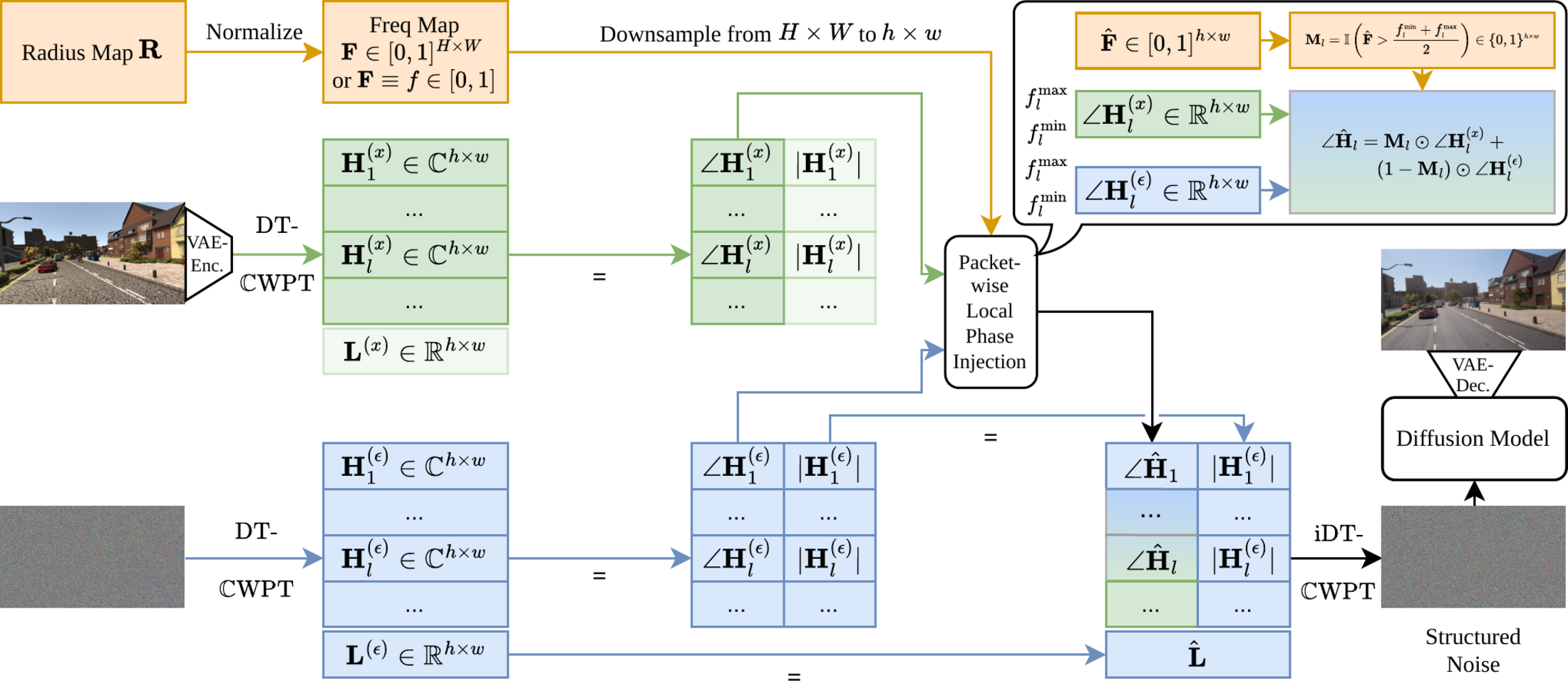
Image Sim-to-Real Translation — vKITTI → KITTI
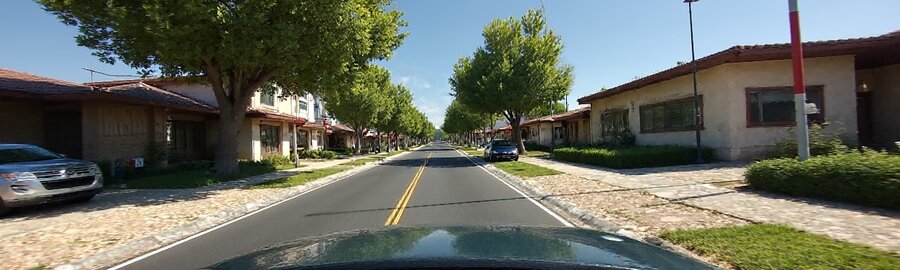
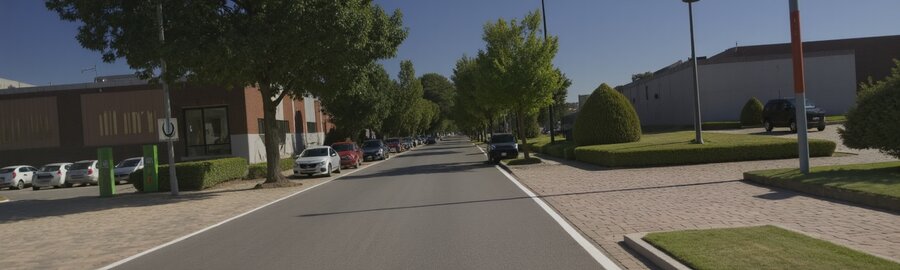
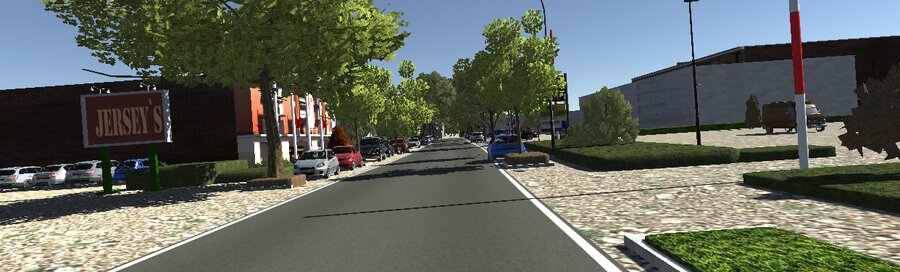
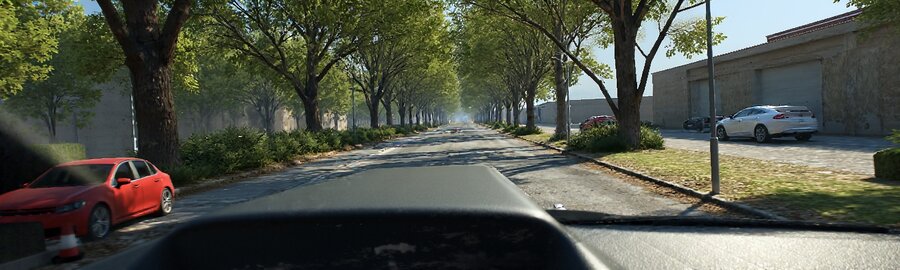
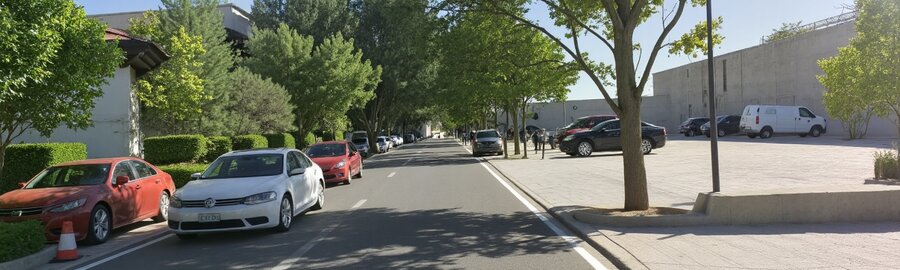
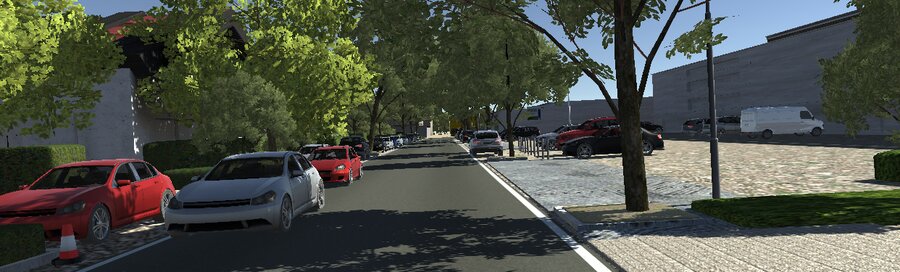
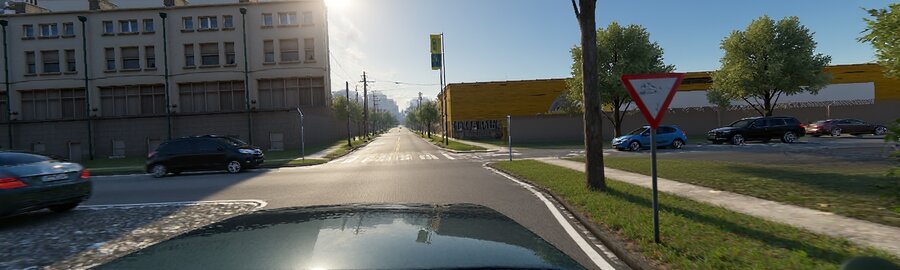
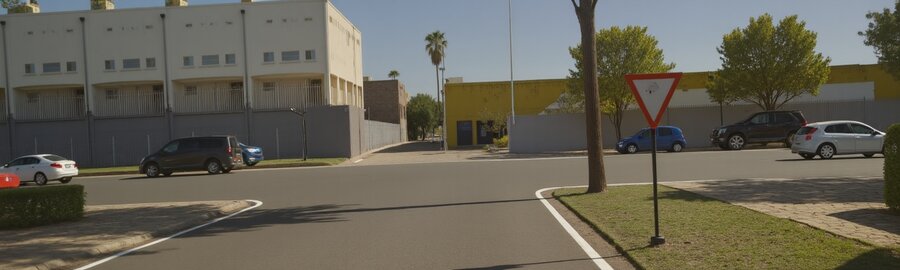
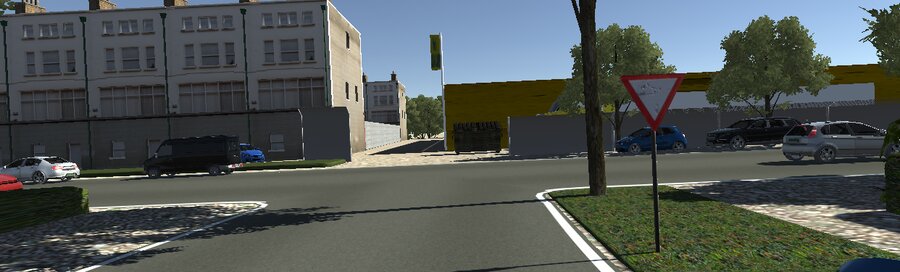
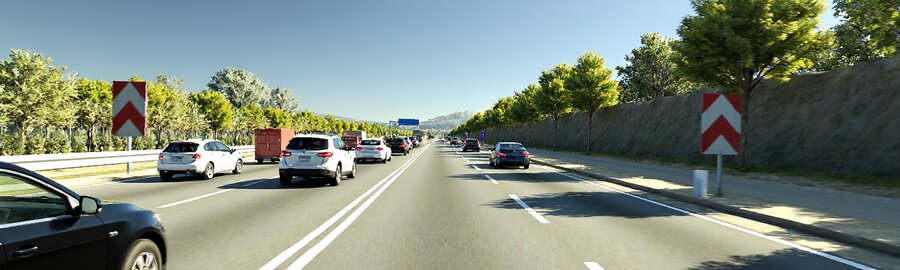
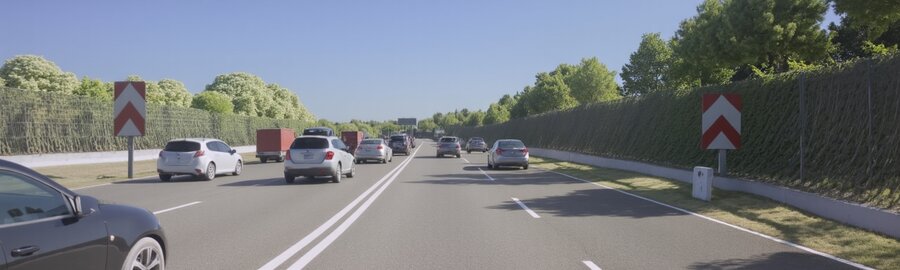
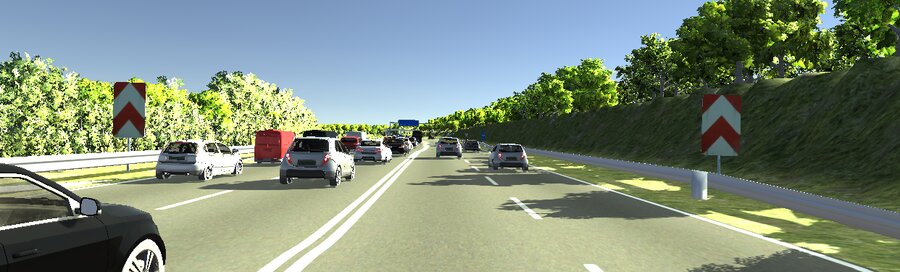
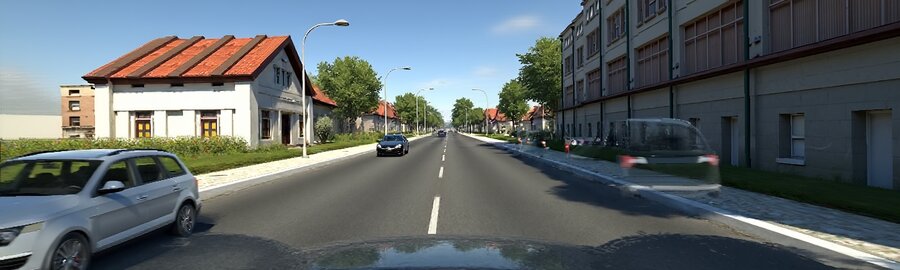
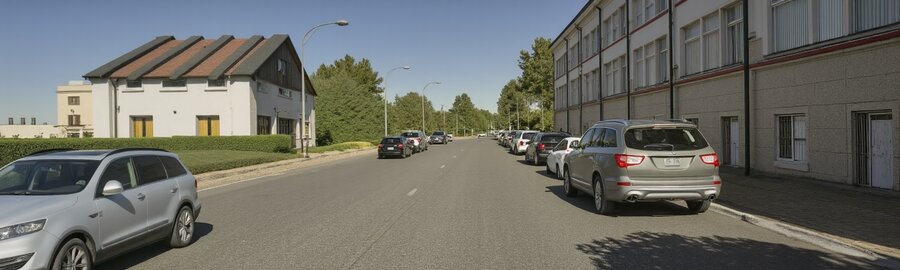
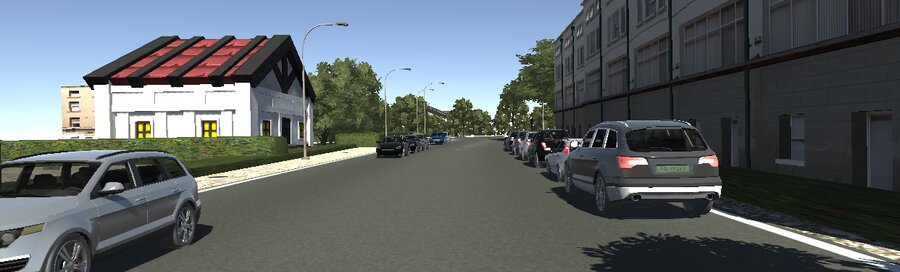
Drag to compare — horizontal: Input vs. Ours; vertical: Ours vs. baseline.
Video Translation Results — CARLA
Drag to compare — horizontal: Input vs. Ours; vertical: Ours vs. baseline. Playback stutter may be due to browser rendering.
Downstream VLM Planning
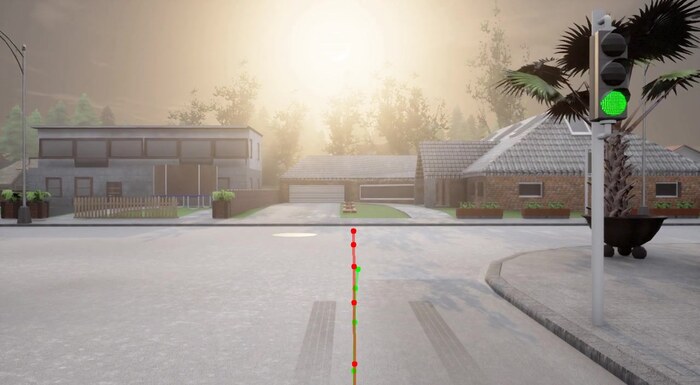
Input (raw sim)
Input (raw sim)
Scene: The front-view camera image displays a suburban street scene under hazy, bright conditions with no visible vehicles or pedestrians. The asphalt road surface shows two faint tire track markings in the foreground and a circular white road marking further ahead. On the right side of the road, a sidewalk with a curb is present, and a traffic light pole stands with its bottom light illuminated green. A large palm tree in a black pot is positioned next to the traffic light. In the background, there are several houses with brown brick facades and gray tiled gabled roofs.
Intent: The ego's previous intent was to decelerate significantly from approximately 4.79 m/s down to a near stop at 0.066 m/s. Taking into account the ego's previous intent and the current scene, it should now accelerate, aiming to reach approximately 10 m/s (3.3 m/s² acceleration) over the next 3 seconds, as the traffic light is green and there are no visible vehicles or pedestrians on the road.
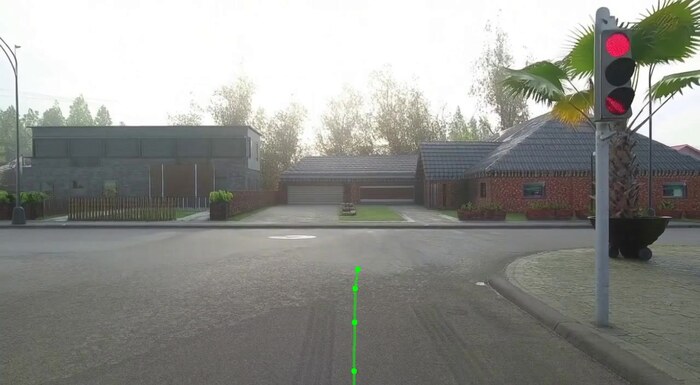
Ditto
Ditto
Scene: The camera view presents a residential street scene under bright, somewhat hazy daylight conditions. The asphalt road surface appears wet or reflective. On the far right, a vertical traffic light pole holds a traffic signal displaying a solid red light at the top and a red downward arrow light illuminated below it. No vehicles or pedestrians are present in the visible area.
Intent: The ego's previous intent was to decelerate significantly from approximately 4.79 m/s to a near stop. Taking into account the ego's previous intent and the current scene displaying a solid red traffic light with a red downward arrow, the ego should decelerate to come to a complete stop at 0 m/s and then maintain that speed for the next 3 seconds.
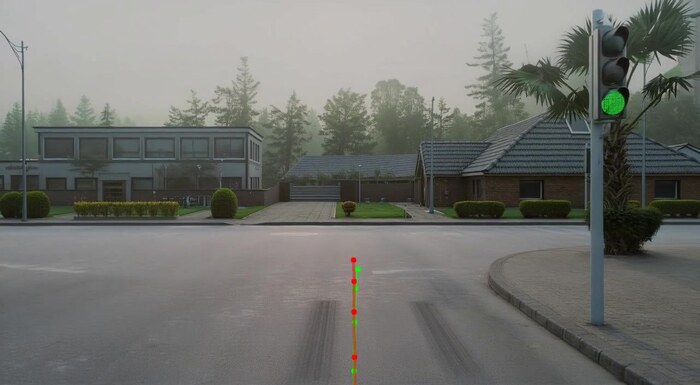
-PD (Ours)
-PD (Ours)
Scene: The scene depicts a road on a foggy or hazy day, with visibility significantly reduced in the distant background. A traffic light pole is positioned on the right side of the road, and its vertical signal head shows a green light illuminated at the bottom. A large palm tree stands prominently next to the traffic light pole. No vehicles or pedestrians are visible in the immediate vicinity.
Intent: The ego vehicle's previous intent was to decelerate, reducing its speed from 4.79 m/s to a near stop at 0.066 m/s. Taking into account the ego's previous intent and the current scene with a green traffic light and no visible obstacles, it should accelerate. A smooth acceleration of approximately 1.5 to 2 m/s² would be appropriate given the foggy conditions, which would increase its speed by 4.5 to 6 m/s over the next 3 seconds.
Zero-Shot Instance-Level Translation



Drag to compare — horizontal: Input vs. Ours; vertical: Ours vs. baseline. Playback stutter may be due to browser rendering. The inset at the top-left of the input highlights the selected area.
Citation
@article{wang2026wavelet,
  title={Wavelet Phase Diffusion for Structurally and Semantically Consistent Sim-to-Real Translation},
  author={Wang, Kaiwen and Bieder, Frank and Shen, Yinzhe and Fernandez, Carlos and Pauls, Jan-Hendrik and Tas, Omer Sahin},
  journal={arXiv preprint arXiv:2607.21628},
  year={2026}
}
Citation will be updated with venue details upon publication.